


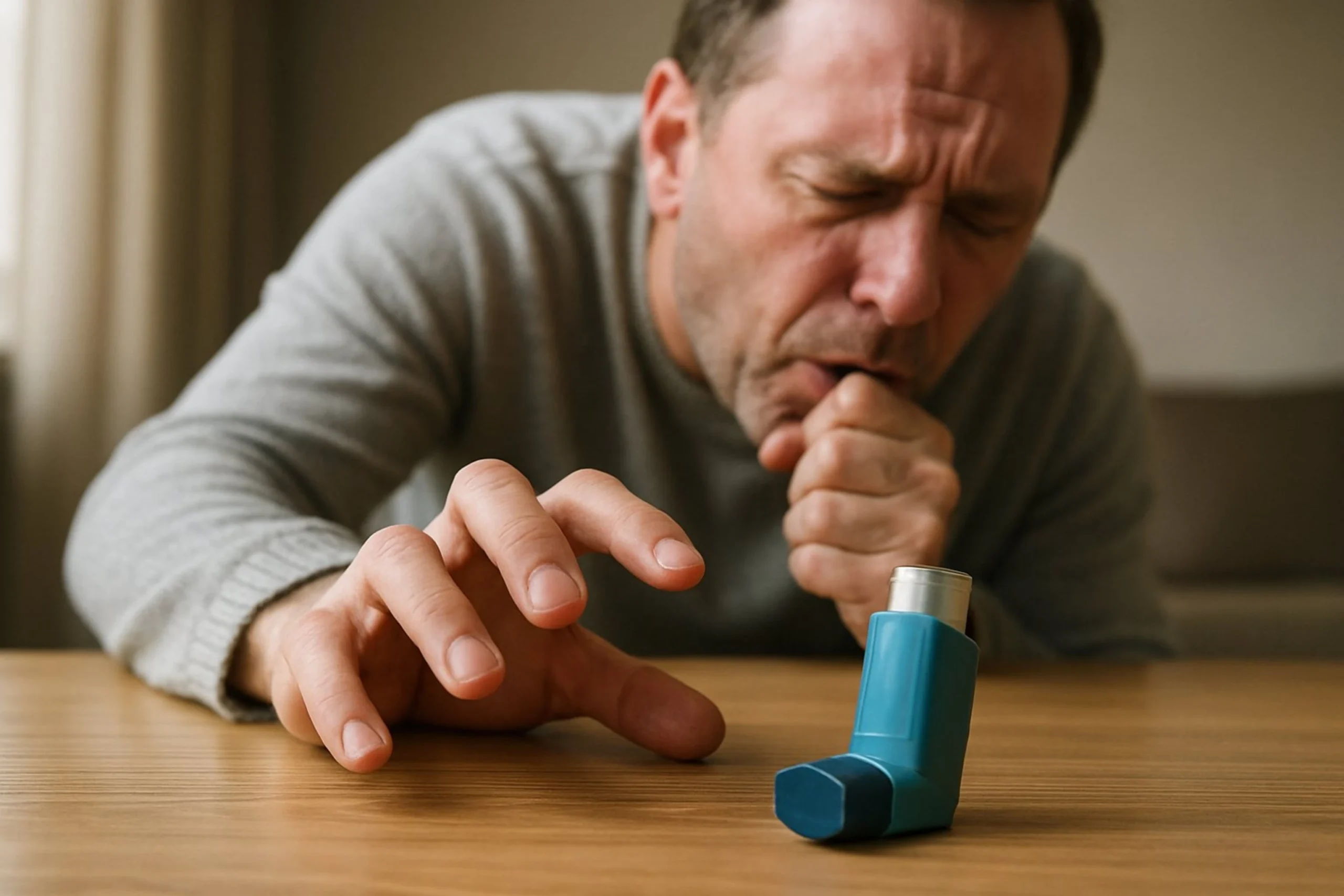
It is very difficult to define what an asthma attack is because its symptoms and causes can vary greatly. Basically, it is characterized by sudden shortness of breath and wheezing. The wheezing sound is often heard during exhalation. The patient feels tightness in the chest and may also cough, but there is little or no mucus. If another infection is present, there may be a large amount of mucus.
The small amount of mucus that is produced is usually clear, white, or colorless. The most important feature of asthma is that it is a temporary condition. After an asthma attack, the patient’s airways return to their normal state, and the patient starts feeling healthy again. This happens because three types of factors are released simultaneously in the lungs, which together narrow the ends of the airways, making it difficult for air to pass through.
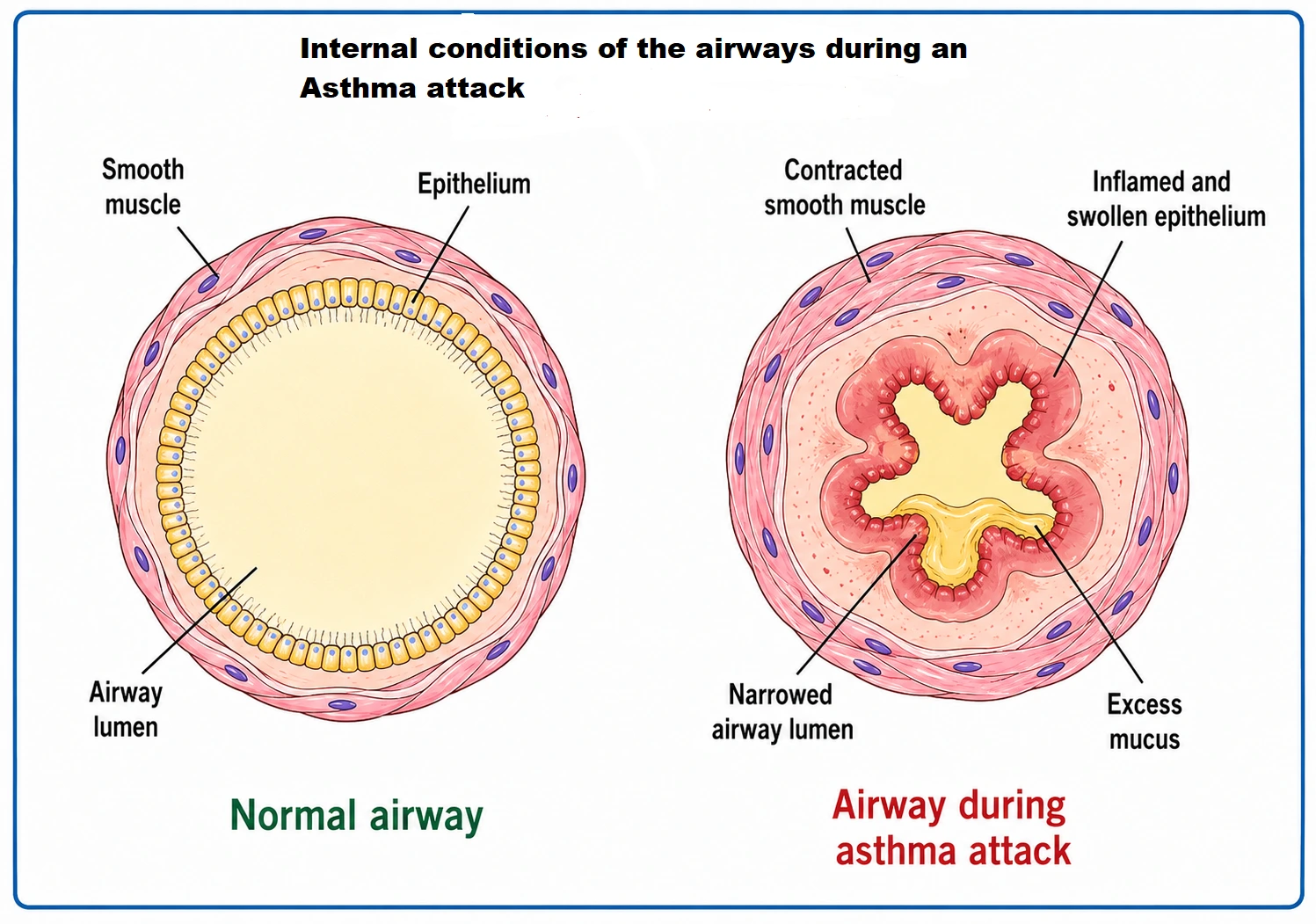
- The smooth muscles of the bronchial tree (airways) contract and become tight.
- The inner walls of the lungs’ airways become swollen and inflamed.
- The glands located beneath the airways produce more mucus than normal.
All these symptoms can be normalized immediately with medication and breathing exercises.
The patient should be given full attention during an asthma attack because the condition may gradually worsen. If a severe asthma attack continues for a long time, all the muscles involved in breathing have to work very hard and eventually become tired. Moreover, the blood may not contain enough oxygen, which can also contribute to fatigue.
At the same time, the mucus in the airways becomes dry and thick because the patient breathes through the mouth throughout the attack. As a result, the patient has neither the time nor the desire to drink anything. It usually takes several days for the condition to reach this stage. If the disease progresses to this point, the patient may need a breathing machine to help with breathing. The solution is to control the disease before it reaches this stage. The general rule is that treatment should be started immediately after the attack begins, and a doctor should be consulted without delay.
Allergic asthma.
Allergic asthma has very distinct symptoms. It becomes less common after the age of forty and almost always begins in childhood. Most often, it develops in children under one year of age after they have suffered from eczema.
During the first few years of life, a child often starts wheezing whenever they catch a cold. They may also develop croup. Croup is a chest infection that causes coughing fits and wheezing. The patient may find it easier to breathe for a short time, but later may develop hay fever or become allergic to a pet in the house.
When spring arrives and the air is filled with pollen, the patient may develop hay fever. The symptoms of hay fever include a runny nose, sneezing, and itchy eyes. Along with these symptoms, the patient may also start coughing and develop wheezing. This is asthma.
This type of asthma is seasonal, and its symptoms develop when the allergens that trigger asthma are present in the air. Some people are allergic to substances that are present in the air throughout the year. For example, they may be allergic to pets, dust, or a specific substance found in their workplace.
In such cases, the asthma symptoms remain constant. Allergic asthma is usually not very severe and can be treated easily by taking medicines, getting enough sleep, and staying away from the elements that cause allergies. Quitting smoking, controlling dust, getting rid of pets, and going to the seaside for a few days are measures that can help relieve allergic asthma. In some cases, allergy injections can also be useful.
Eosinophilic Asthma
Eosinophilic asthma is a type of asthma caused by a high number of eosinophils in the airways. Eosinophils are a type of white blood cell that help the body fight infections. However, when too many eosinophils collect in the airways, they cause swelling and inflammation. This makes the airways narrow and breathing becomes difficult.
People with eosinophilic asthma often have coughing, wheezing, shortness of breath, and chest tightness. These symptoms may become worse if the disease is not treated properly. This type of asthma can affect both adults and children, but it is more common in adults.
Doctors diagnose eosinophilic asthma by checking the number of eosinophils in the blood or sputum. Treatment usually includes inhalers, corticosteroid medicines, and in some cases, biologic injections. With proper treatment, most people can control their symptoms and live a normal life.
Is it possible to get rid of asthma?
It is generally believed that children outgrow asthma. This is true in about 50 percent of cases, with half of the remaining 50 percent getting better as they grow older and only experiencing symptoms when exercising or having a bad cold. Thus, one in four people with asthma continue to have asthma as adults and require regular treatment.
Asthma attack symptoms at night.
Asthma attack symptoms at night are very common. Many people notice that their asthma becomes worse during the night or early in the morning. The exact reason is not fully known, but many patients feel more comfortable if they sleep with two or three pillows under their head instead of one.
Common nighttime asthma symptoms include coughing, wheezing, shortness of breath, chest tightness, and waking up suddenly because of difficulty breathing. Sleeping immediately after eating can also make asthma symptoms worse. For this reason, people with asthma should avoid eating for some time before going to bed.
If the bedroom is too hot, too cold, or too dry, it may trigger coughing and increase the risk of an asthma attack. Keeping the room clean, well-ventilated, and at a comfortable temperature may help reduce asthma symptoms at night.
